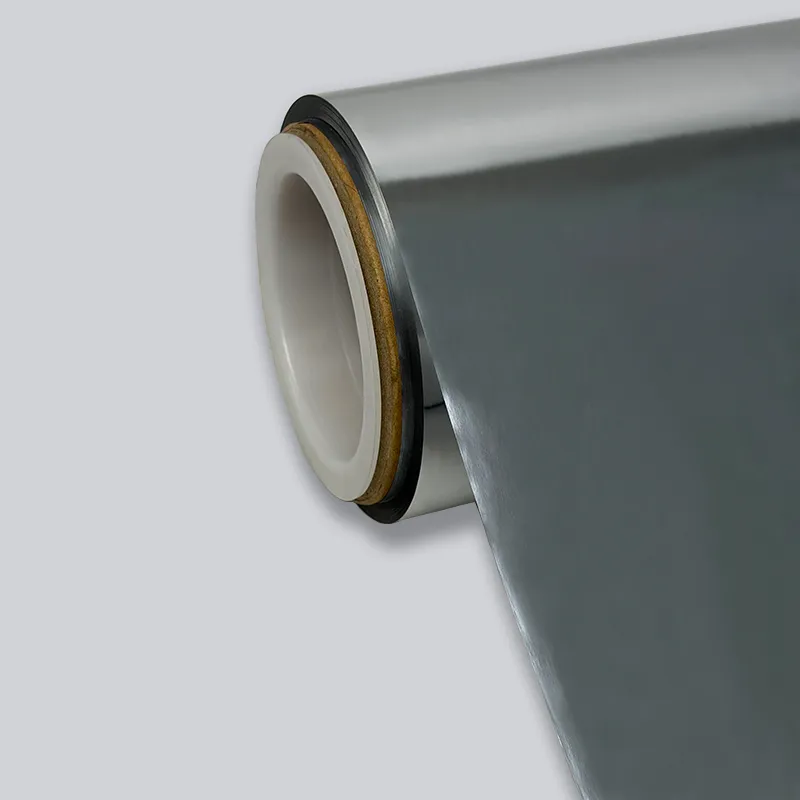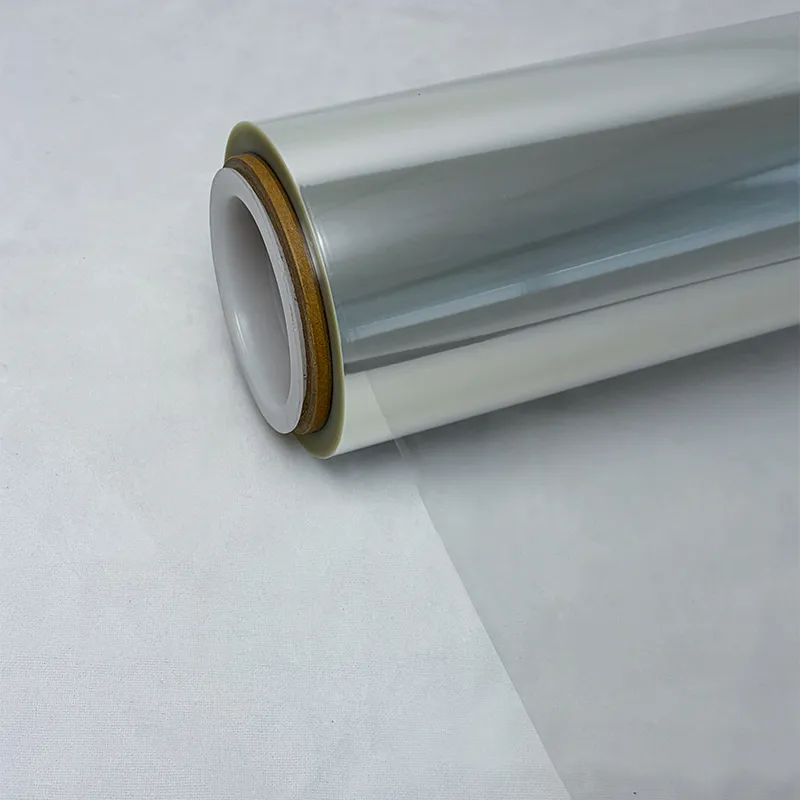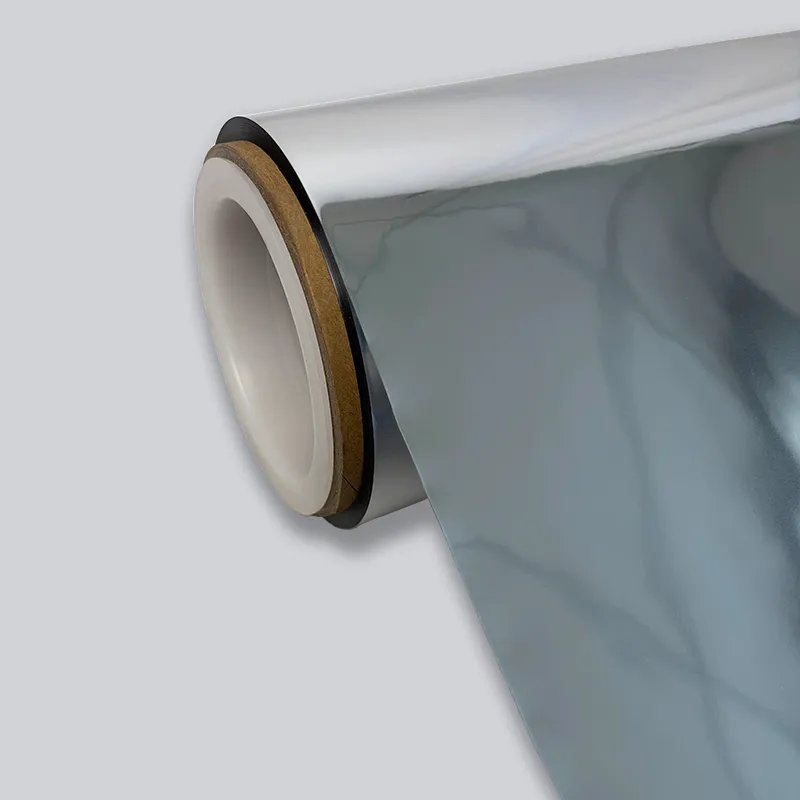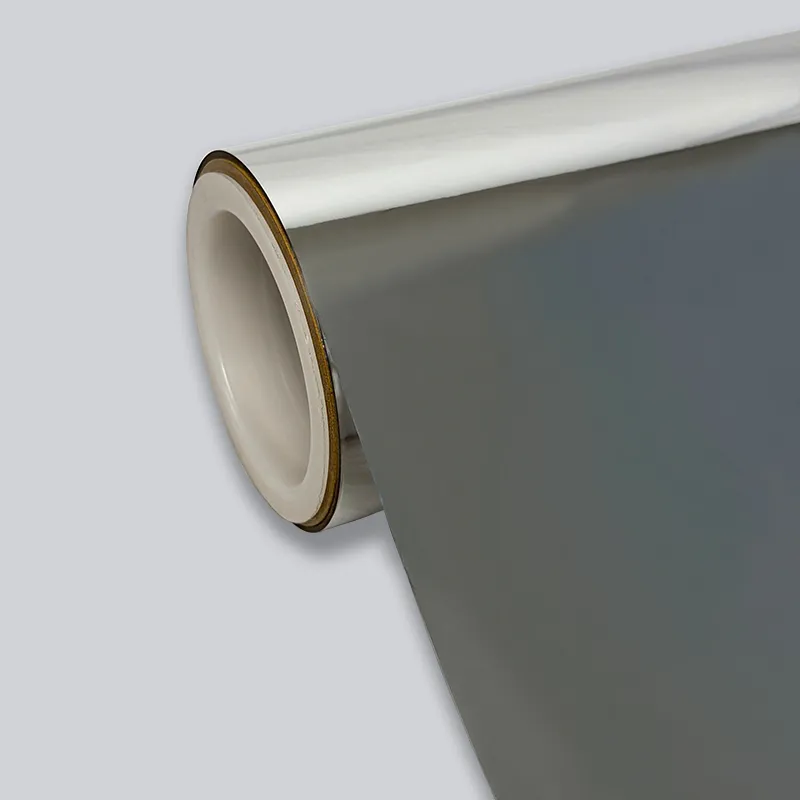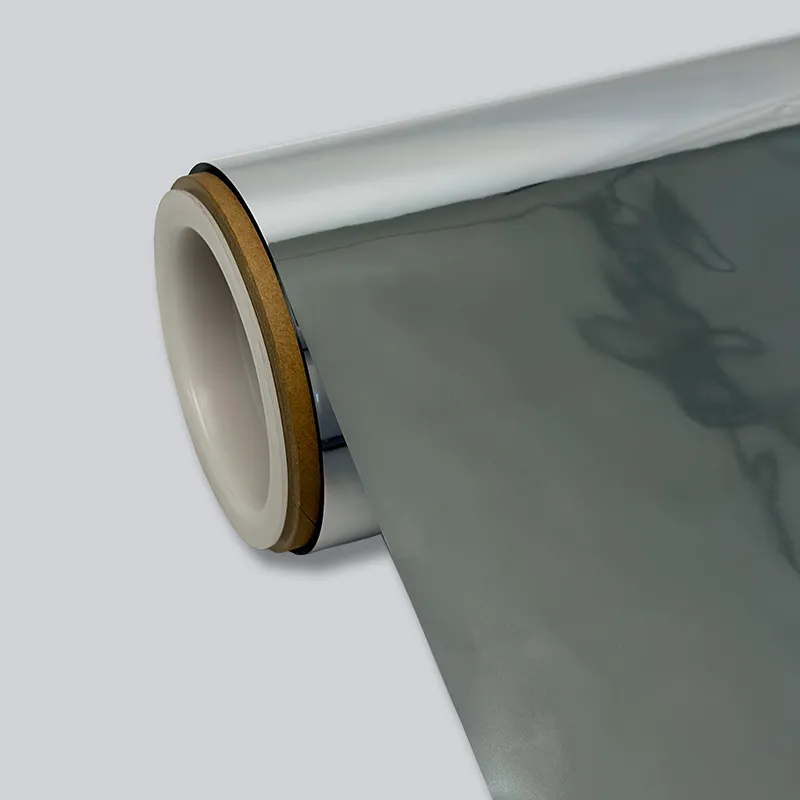
8 / 10 / 12 Micron Metalized PET Film is a lightweight reflective polyester film designed for flexible packaging, thermal insulation, lamination, and other industrial applications. Manufactured by applying a thin aluminum layer to PET film through vacuum metallization, it combines the mechanical properties of polyester with the reflective and high-barrier characteristics of an aluminum-coated surface.
Available in 8, 10, and 12 micron thicknesses, the film provides flexible options for manufacturers looking to balance material weight, mechanical performance, processing requirements, and overall cost.
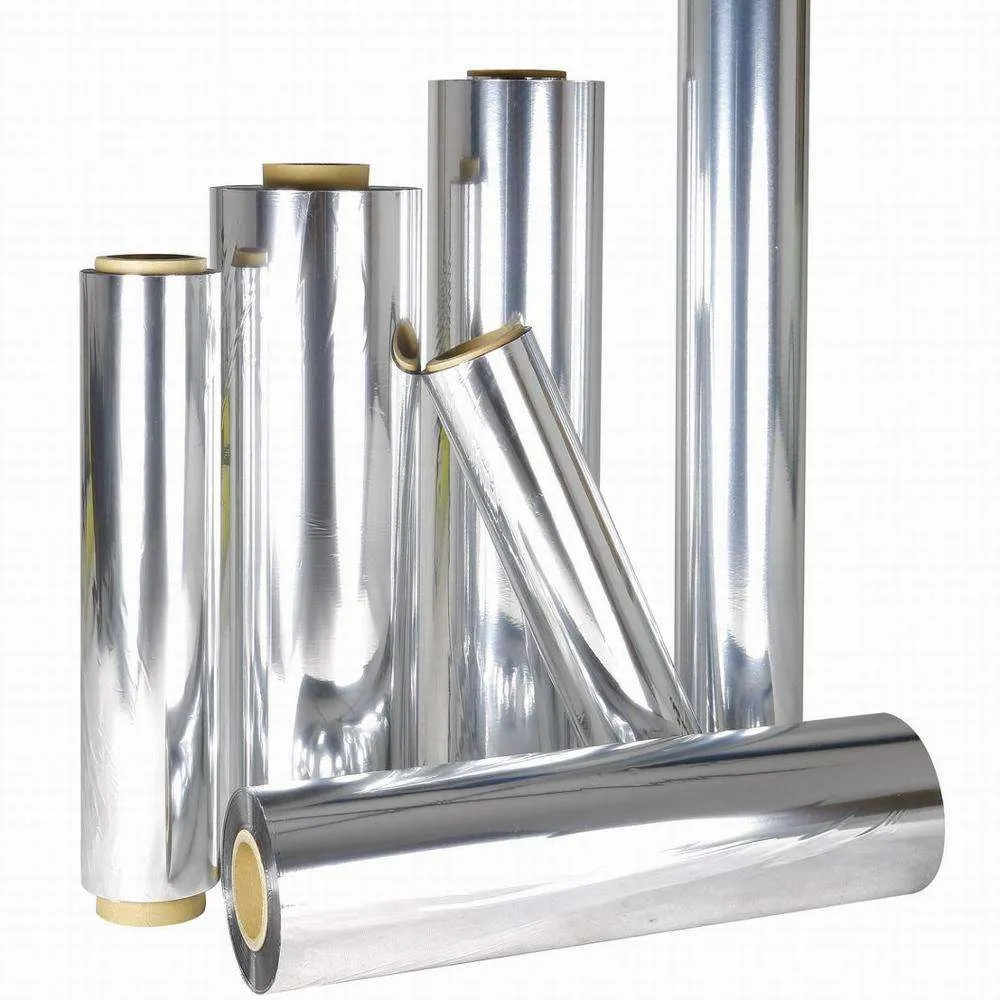
Metalized PET Film, also known as metallized polyester film, aluminized PET film, or VMPET, consists of a PET substrate and a thin vacuum-deposited aluminum layer.
The PET substrate provides:
The metallized surface provides:
The combination makes 8 / 10 / 12 micron Metalized PET Film suitable for manufacturers that require a functional and lightweight reflective film.
| Specification | Recommended Considerations |
|---|---|
| 8 Micron Metalized Polyester Film | Lightweight structures, material efficiency, flexible laminates |
| 10 Micron Metalized Polyester Film | Balanced mechanical performance and material consumption |
| 12 Micron Metalized Polyester Film | Higher substrate thickness for demanding converting and laminate structures |
The appropriate thickness depends on the final product structure, converting equipment, mechanical requirements, and application.
A thicker film is not necessarily a better choice. For high-volume production, selecting the minimum thickness that meets the required performance can help optimize material consumption and production costs.
The vacuum-deposited aluminum layer creates a bright reflective surface that can help reflect radiant energy. This makes metallized PET useful in reflective insulation and thermal management products.
With aluminum deposited as a very thin surface layer, Metallized PET Film provides metallic functionality without the weight associated with conventional aluminum foil.
This is particularly useful for flexible packaging and lightweight insulation products.
The metallized layer can improve resistance to moisture and light transmission when incorporated into an appropriate multilayer structure. This makes VMPET suitable for packaging products that require additional protection from environmental exposure.
The PET substrate provides good tensile strength and dimensional stability, supporting stable converting, laminating, slitting, and roll handling.
Metalized PET Film can be laminated with PE, CPP, BOPP, paper, foam, bubble film, woven fabric, and other substrates depending on the final application and adhesive system.
The reflective surface of Metalized PET Film makes it suitable for insulation structures designed to manage radiant heat.
It can be laminated with PE, EPE, XPE, bubble structures, woven fabric, or other insulation materials for applications such as:
In these structures, the metallized surface primarily contributes to radiant heat control, while the insulation core provides additional resistance to conductive and convective heat transfer.
8 / 10 / 12 micron Metalized PET Film can be incorporated into laminated paper and foam structures.
For example:
Metalized PET + PE + EPE Foam
or:
Metalized PET + Paper + Adhesive
These structures can combine reflective performance with mechanical support, flexibility, and insulation functionality.
Depending on the grade and laminate structure, metallized PET can also be considered for industrial insulation, shielding-related structures, protective materials, and other applications where a lightweight metallized polyester substrate is required.
Metallized PET is widely considered for flexible packaging structures where moisture, oxygen, aroma, and light protection are important.
Potential applications include:
For food packaging, the final barrier and sealing performance depend on the complete laminate rather than the metallized PET layer alone.
| Item | Specification |
|---|---|
| Product | Metalized PET Film |
| Material | PET / Polyester |
| Thickness | 8 / 10 / 12 micron |
| Metallization | Vacuum aluminum metallization |
| Appearance | Silver / metallic reflective surface |
| Structure | PET + Aluminum metallized layer |
| Roll Form | Jumbo roll / customized roll |
| Processing | Laminating, slitting, coating, converting |
| Application | Packaging, insulation, lamination, industrial materials |
| Customization | Thickness, width, roll specifications, structure |
Actual technical specifications can be adjusted according to the requirements of the final application and downstream production process.
Choosing between 8, 10, and 12 micron film allows manufacturers to optimize the relationship between performance and material consumption.
8 micron film is suitable when lightweight construction and material efficiency are important. It can be considered for flexible laminates and applications where the film substrate does not need to provide excessive mechanical strength.
10 micron provides a balanced option between lightweight construction and mechanical performance. It can be suitable for general packaging and insulation laminate structures.
12 micron provides a thicker PET substrate and may be selected when greater substrate strength, handling stability, or converting requirements need to be considered.
The final selection should always be based on the complete laminate design and production conditions.
For B2B applications, consistent film quality is essential because variations in thickness, metallization, surface condition, or mechanical properties can affect downstream converting.
Quality evaluation may include:
For packaging and insulation manufacturers, stable roll-to-roll quality helps reduce production interruptions and material waste. Other specific testing parameters can be obtained by contacting our professional team.
Metalized PET Film should be stored in a clean and dry environment away from direct sunlight, excessive humidity, and extreme temperature changes.
During handling and converting, unnecessary contact with the metallized surface should be avoided to reduce the risk of scratches, contamination, or surface damage.
For long-term storage, the original packaging should remain intact whenever possible.
Before placing a bulk order, manufacturers should confirm several specifications:
1. Film thickness
Choose 8, 10, or 12 micron according to mechanical and structural requirements.
2. Film width
The width should match the downstream laminating, printing, slitting, or converting equipment.
3. Metallization requirements
Reflectivity, optical density, surface uniformity, and application requirements should be considered.
4. Lamination structure
Confirm the film’s compatibility with PE, CPP, paper, foam, bubble film, woven fabric, or other substrates.
5. Order quantity
Bulk production can help optimize manufacturing and logistics costs.
6. End application
Food packaging, thermal insulation, paper lamination, and industrial applications may require different film specifications.
Taiwangte New Material is a China-based manufacturer specializing in metallized films and laminated material solutions. Its product range includes Metalized PET Film, Metallized BOPP Film, Metallized CPP Film, Metallized PE Film, ALOx Film, and related flexible material structures.
For 8 / 10 / 12 micron Metalized PET Film, Taiwangte can support B2B customers with different thicknesses, widths, roll specifications, and application-oriented material structures.
The company focuses on consistent vacuum metallization, controlled production processes, and quality inspection for applications including flexible packaging, thermal insulation, paper and foam lamination, and industrial materials.
For manufacturers purchasing Metalized PET Film in bulk, the focus is not only on the film price but also on consistent quality, converting performance, customization capability, production capacity, and supply stability.
It is polyester PET film with a thin aluminum layer deposited through vacuum metallization. The three thickness options provide different balances of weight, mechanical performance, and processing requirements.
It is commonly used in flexible packaging, reflective insulation, paper and foam lamination, industrial materials, and other applications requiring a lightweight metallized polyester film.
The main difference is the PET substrate thickness. 8 micron focuses more on lightweight material efficiency, 10 micron provides a balanced option, while 12 micron offers a thicker substrate for applications requiring additional handling or mechanical stability.
Yes. Metalized PET can be incorporated into PE-laminated structures for packaging and insulation applications. The specific adhesive, coating, and lamination conditions should be selected according to the final structure.
Yes. Width and roll specifications can be discussed according to the requirements of the customer’s converting equipment and application.
Yes. Its reflective aluminum surface can be used as a functional layer in reflective insulation structures. It is commonly combined with foam, bubble film, PE, woven fabric, or other insulating materials.
The choice depends on the final product structure, required mechanical strength, converting process, target weight, and cost requirements. For a specific project, the film should be evaluated together with the complete laminate structure.